Energy Use and Running Cost · 7 min read
How Much Does a Sub-Zero Cost to Run? Energy Use in Alameda Homes
What a Sub-Zero really costs to run in Alameda: typical kWh per day, why salt air raises the draw, and which repairs cut it. $89 visit, credited to the repair.
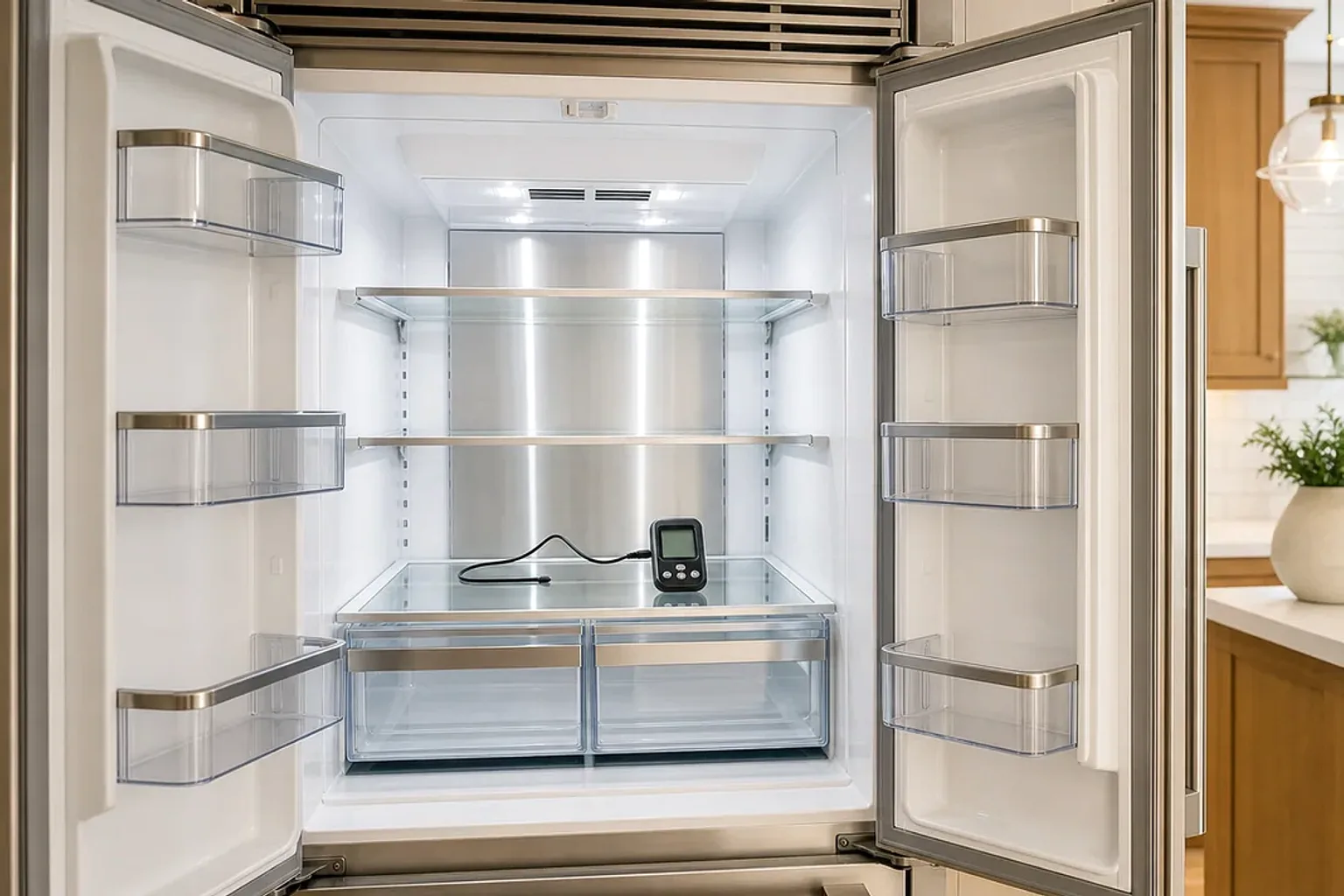
A Sub-Zero built-in refrigerator typically uses 1.5 to 2.5 kWh of electricity per day, roughly 550 to 900 kWh per year, when the condenser is clean and the door gaskets seal properly. A neglected 20-year-old 500 series in Alameda's salt air can double that draw, running its compressor nearly nonstop. Even then, Alameda Municipal Power's island rates keep the monthly burden smaller than most owners fear.
Alameda pulls the running-cost math in two directions at once. Alameda Municipal Power charges island households far less than mainland utilities, while the salt air drifting across the Gold Coast and South Shore quietly drags every condenser toward that doubled figure. This guide covers what the meter actually records in 94501 and which repairs bring the number back down.
How much electricity does a Sub-Zero refrigerator use?
A healthy Sub-Zero built-in draws between 1.5 and 2.5 kWh per day, which puts a 600 series or a BI-36U on par with many ordinary side-by-sides despite a far larger cabinet. Sub-Zero's dual compressor layout helps: the refrigerator and freezer sections cool independently, so neither compartment forces the other to overwork. Most current models carry ratings between 550 and 700 kWh per year.
An aging Sub-Zero tells a different story. A 500 series from the late 1990s that has never had its condenser vacuumed can pull 4 to 5 kWh per day, double or triple its original rating, because the compressor runs near a 100 percent duty cycle instead of the healthy 40 to 60 percent.
Why do Alameda Municipal Power rates change the math?
Alameda Municipal Power hands island homeowners a genuine advantage: residential rates here run well below neighboring mainland territory. That gap matters when deciding whether an older Sub-Zero is worth keeping. The same kilowatt-hours that sting in Oakland or Berkeley cost meaningfully less on this side of the estuary, so replacing a working built-in purely on energy grounds pays back slowly in 94501.
A Sub-Zero owner in a Gold Coast Victorian should therefore judge the appliance on condition, not age. If the unit holds 38 F in the refrigerator and 0 F in the freezer without running constantly, the energy burden stays modest even at twice the rated draw.
What does salt air off the estuary do to the condenser?
The Sub-Zero condenser coil is the component Alameda's marine air punishes hardest. Salt-laden moisture from the estuary and South Shore corrodes the aluminum fins and turns household dust into a crust that bonds to the coil. A blocked condenser cannot shed heat, so the compressor runs 20 to 30 percent longer to hold the same temperatures, and every extra minute shows up on the meter.
The condenser on a built-in Sub-Zero sits behind the top grille, out of sight and easy to forget. Inland owners can clean it yearly; within a few blocks of the shoreline we recommend every 3 to 6 months. A soft brush and a vacuum recover most of the lost efficiency in twenty minutes.
The 500 series to 700 series gap, model by model
A 1998 Sub-Zero 532 and a current BI-42 solve the same problem with very different appetites. The older 500 series was built before modern efficiency standards, and original ratings often exceeded 1,200 kWh per year; a comparable current model rates roughly half that. The 700 series integrated columns from the early 2000s sit in between.
The Sub-Zero compressor is the deciding variable more often than the model year. A worn compressor or a low refrigerant charge makes a 600 series burn more power than a well-kept 500 series ever did. Before judging a unit by its age, measure how long it actually runs: a healthy cycle rests almost as much as it works.
Which repairs actually cut a Sub-Zero's power draw?
A door gasket replacement is the cheapest efficiency fix on any Sub-Zero, and correcting a failing sealed system sits at the pricier end of a repair visit. A torn or hardened gasket lets humid island air pour into the cabinet, and the compressor pays for it around the clock; fresh gaskets shorten run time noticeably within a day.
A weak evaporator fan or an iced-over coil inside a Sub-Zero also masquerades as an energy problem. One diagnostic visit pins down which component is at fault, and the $89 service call fee is credited toward the repair once you approve the work.
When does a high bill mean the Sub-Zero needs repair?
A Sub-Zero that never seems to shut off is reporting a fault, not proving that built-ins are power hogs. Constant running with warm compartments points to the condenser, gaskets, or refrigerant charge; constant running at correct temperatures usually means a heavy frost load or a stuck defrost cycle.
The repair-or-replace decision on an older Sub-Zero deserves numbers, not nostalgia. In our Alameda work a targeted fix restores a normal duty cycle in most cases, and Alameda Municipal Power's pricing keeps the running-cost penalty of an older unit small. Replacement makes sense mainly when the sealed system fails past the 25-year mark.
Questions & answers
How many kilowatt-hours does a Sub-Zero refrigerator use?
A healthy built-in Sub-Zero uses about 1.5 to 2.5 kWh per day, or 550 to 900 kWh per year. A neglected 20-year-old unit in Alameda's salt air can double that, which usually signals a repairable fault rather than old age.
Why is my Sub-Zero running all the time?
A dirty condenser, a worn door gasket, or a low refrigerant charge are the usual causes. A healthy compressor rests 40 to 60 percent of the time; nonstop running means wasted power and accelerating wear.
How often should I clean a Sub-Zero condenser near the water?
Every 3 to 6 months within a few blocks of Alameda's shoreline, and every 6 to 12 months inland. Salt-heavy dust bonds to the coil and forces longer compressor cycles.
Can I lower a Sub-Zero's energy use without a repair?
Yes. Set the refrigerator to 38 F and the freezer to 0 F, vacuum the condenser behind the top grille, and confirm the gaskets grip a sheet of paper on all four sides. Alameda Sub-Zero Repair can take a same-day look — (510) 390-9712.
What does a Sub-Zero energy diagnosis cost in Alameda?
The service call is $89, and the fee is credited toward the repair if you approve the work. The visit covers a duty-cycle check, condenser inspection, and gasket assessment.
More Alameda guides
How to Verify a Sub-Zero Repair Company in Alameda: License, Insurance, and the Island Test
Three checks before you book Sub-Zero repair in Alameda: the free state registration lookup, a real insurance certificate, and the island logistics test.
Read the guide → Sub-Zero freezer not freezing · 4 minSub-Zero Freezer Not Freezing While the Fridge Stays Cold: An Alameda Diagnostic
Why a Sub-Zero freezer drifts warm while the fridge stays cold in Alameda: sealed-system vs defrost vs salt-fouled condenser, plus the $89 diagnostic.
Read the guide → Wine storage guide · 6 minWhy a Sub-Zero wine column drifts warm on the Alameda waterfront
A Sub-Zero wine column that creeps above 55°F in Alameda is usually airflow, a tired dual-zone sensor, or a seal aged by estuary humidity — not a dead compressor. What's really happening and how it's fixed.
Read the guide →Rather leave it to a specialist?
Have the failing compartment and the model number ready, and you will get a real first opinion — not a sales pitch.
| Typical daily draw | 1.5 to 2.5 kWh for a healthy built-in (550 to 900 kWh per year) |
|---|---|
| Neglected unit | An uncleaned 500 series can double or triple its rated draw |
| Condenser cleaning | Every 3 to 6 months near the shoreline, 6 to 12 inland |
| Diagnostic | $89 service call, credited toward the repair |
| Coverage | Same-day visits across Alameda and Bay Farm Island (94501) |
| Local help | Alameda Sub-Zero Repair — (510) 390-9712 |
Efficiency calls we have handled around the island
Our 1999 Sub-Zero 532 was running day and night. Mike vacuumed a shocking amount of gray crust off the condenser and the kitchen is finally quiet again. He showed me the coil so I could see why.
New door gaskets stopped my 600 series from cycling all night. The tech arrived past the quoted window, but the work itself was careful and the difference in run time was obvious within a week.
They timed the compressor cycles on our 700 series column and traced the constant running to a weak evaporator fan. Honest advice too - repair made sense, and the unit now rests between cycles like it should.
I was ready to replace a 20-year-old unit over the electric bill. He walked me through Alameda Municipal Power's rates, set the temperatures properly, and talked me out of an unnecessary purchase.
Book this repair: Sub-Zero maintenance calendar · sealed system and compressor repair · repair or replace guidance