Where do I find my Sub-Zero model and serial number?
On most Sub-Zero units, the model and serial tag sits on the upper interior side wall of the fresh-food compartment; columns and drawers carry it on the inner side wall, built-ins repeat it behind the lower grille, and wine units print it on the inner door frame. Photograph the model and serial in one shot for your Alameda repair.
Sub-Zero model & serial number location by unit type
Pick the row that matches the cabinet in your Alameda kitchen, look in the first column, and if it's blocked by a shelf or buried in tight period millwork, check the backup spot. Photograph the model and serial together once you find the plate.
| Unit type | First place to look | Backup location |
|---|---|---|
| Built-in / column (BI · IC) | Upper interior side wall of the fresh-food compartment, behind the top shelf | Near the upper door hinge on integrated columns, or behind the lower toe-grille on built-ins |
| Undercounter drawer (UC · UR) | Inner side wall of the drawer or cabinet, near the top edge | Rear panel by the lower compressor area when the front is clear |
| Wine column (427 · 424) | Top interior above the racks, along the ceiling toward the hinge | Inner door frame, visible with the door open and the upper rack slid out |
| Classic / freestanding | Upper interior side wall of the fresh-food section | Behind the lower grille at the base of the cabinet |
| PRO 48 / PRO 36 | Interior side-wall plate inside the fresh-food compartment | Repeated behind the upper toe-grille if the inside is blocked |
Out by the open water, marine air ages gaskets fast — read the serial to us so the right factory-authorized OEM profile is matched before a visit.
Where the rating plate hides on each Sub-Zero cabinet
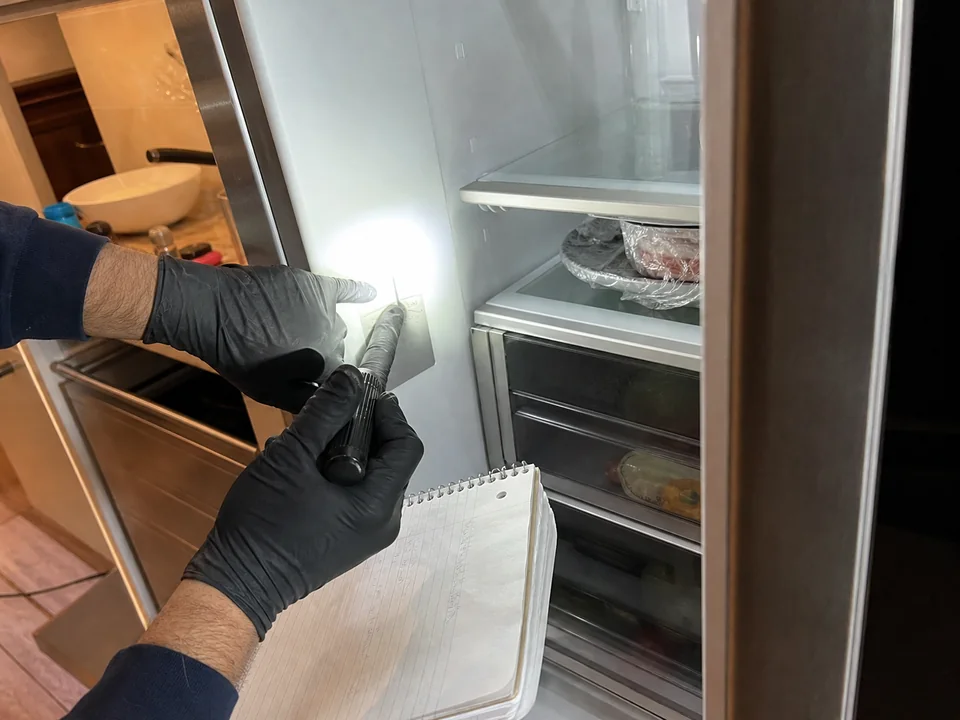
Sub-Zero never puts the tag where a marketing sticker goes. It lives inside the food space, out of sight, and the spot moves with the cabinet style. Open the door, bring a phone light, and check the spot that matches your unit below. A photo of the plate beats reading digits over the phone, because the serial is easy to misread.
Upper interior side wall
On built-in BI-series refrigerators and freezers, the plate sits high on the inside side wall of the fresh-food compartment, usually behind the top shelf. Slide the shelf forward and look up toward the corner.
Near the upper hinge
Integrated and column units carry the tag close to the upper hinge inside the cabinet. On panel-ready columns, open the door fully and scan the top inner frame rather than the side wall.
Inner wall or back panel
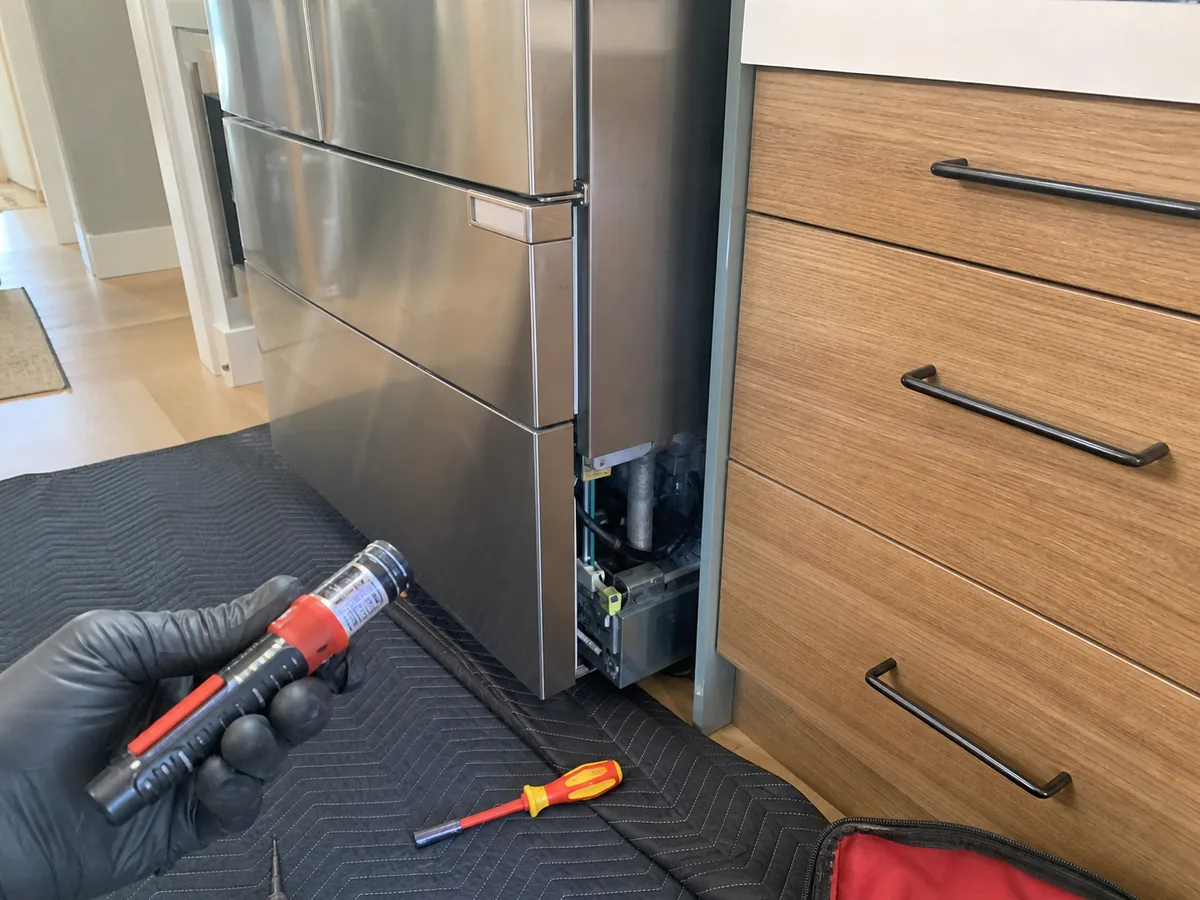
Undercounter refrigerators, wine units, and ice makers print the plate on an inner side wall or the rear panel. If the front is clear, the number is usually around the back near the lower compressor area.
Top interior, above the racks
Wine storage columns place the plate at the top of the interior above the top rack. Slide the upper rack out and look along the ceiling toward the hinge side.
Behind the upper grille
Professional units may repeat the data behind the upper toe-grille. The interior side-wall plate is primary; the grille copy is a backup if the inside is blocked.
Tell us the cabinet type
Wedged into tight waterfront cabinetry and can't safely read the plate? Describe the cabinet and we'll guide you, or confirm it on site before any part is named.
Five seconds with a phone light
Open the door, aim a light at the upper side wall or hinge, slide the nearest shelf or rack out of the way, photograph the whole plate (not just the model), and don't wipe it — a smudged serial is harder to read than a dusty one. If the print has faded from years of fridge humidity, a raking-angle photo brings the embossed digits back.
Reading the number: what model vs. serial actually encode
People use "model number" to mean the whole tag, but the model and the serial do two different jobs. The model names the platform; the serial pins the exact build. For a Sub-Zero repair, you usually need both — and on this brand the serial is the one that quietly decides which part fits.
| Field | Example shape | What it encodes | Why it matters for the part |
|---|---|---|---|
| Model | BI-36UFDID/S/TH | Platform, width, door style, finish | Narrows to a family of parts, not the exact one |
| Prefix | BI / IC / UC / 427 | Built-in, integrated column, undercounter, wine | Tells us where the tag is and how it's serviced |
| Serial | Eight-digit run number | The exact production run and revision | Fixes the fan, gasket profile, and board revision |
| Type / class | Refrigerator, freezer, dual | Single vs. dual sealed system | Separates a fan fault from a sealed-system question |
| Electrical | 115V / 60Hz rating | Voltage and current draw | Confirms motor and board compatibility |
A worked example: a tag reading BI-36UFDID/S/TH says built-in, 36-inch, upper fridge / lower freezer, internal dispenser, stainless, tubular handle. That's the model doing its job. But whether your generation uses the early or the revised evaporator fan — and the matching control board — is hidden in the serial. Same badge, two part numbers. That's the gap we close before we drive over.
Why the number decides the repair, not the guess
The serial is most useful at the two ends of the cost scale — the cheap gasket and the expensive sealed system. A door gasket leak that shows up as condensation or a creeping frost line is a good example: the magnetic gasket has to match the door profile of your exact build, and Sub-Zero revised those profiles across generations. Order from the model alone and you can get a seal that's close but won't compress evenly, which on the Island's humid air means the sweat comes right back. The serial removes that guesswork.
At the other end is sealed-system suspicion that needs EPA-certified verification. In plain language: when both compartments slowly warm and the compressor is suspect, refrigerant may have escaped — and that means there is a leak somewhere in a closed loop. Diagnosis confirms it with a leak test and pressure readings taken against the spec for your serial, not a hunch. The honest limitation: we cannot know before opening and measuring whether the loss is a small recoverable joint or a buried evaporator leak that changes the whole repair economics. We won't quote that work blind, and we won't "top off" a system with a leak.
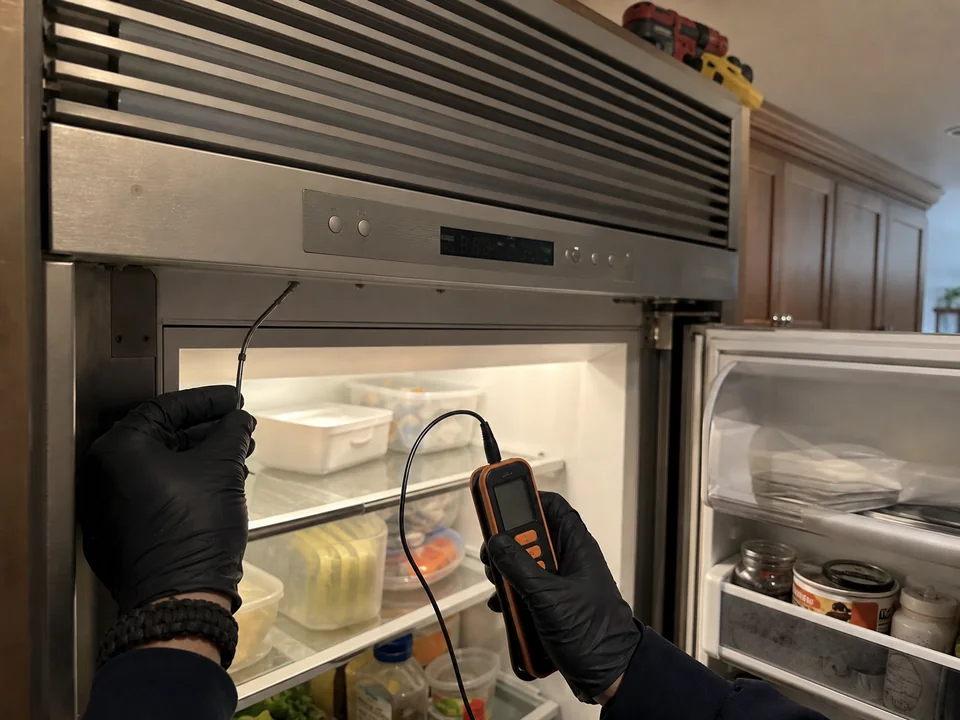
There's a third reason the tag matters: built-in cabinet removal and reseat risk. Pulling a Sub-Zero past custom millwork to reach the back is the moment a repair can scratch a panel or rack the door. Knowing the model and serial first lets us bring the right glides and the right part in one trip, so the unit comes out once, not twice. While it's out, the evidence the technician documents is concrete — temperature readings over a cycle, condenser and evaporator photos, model-tag proof, and factory-authorized OEM fan, gasket, or control-board evidence — so the reseat is justified by what we measured rather than a sales pitch.
Why the tag matters more in an Alameda kitchen
Reading the plate before a visit saves a trip that, in Alameda, is rarely a quick one. A call into central Alameda in 94501 means tight period kitchens where a built-in is set into original millwork with barely a finger of clearance — the kind of install where the tag is buried behind a top shelf and the unit has to be eased out carefully to reach anything. Confirming the serial in advance lets us pre-stage the right gasket or fan so the cabinet is opened once, not opened, measured, and opened again a week later when the correct part finally arrives.
San Leandro shows the same logic from the other side. A repair just down the shoreline carries a different service reality than central Alameda: newer and mixed housing stock, a different appliance mix, easier driveway access in some tracts and condo routing in others, and a climate that's a touch drier a few minutes from the open water. The home's age, the cabinetry, and how the kitchen was remodeled all change how long a pull takes and which faults are likely — which is exactly why a model and serial confirmed up front lets us route the visit and the parts to what your specific home and unit need, rather than a generic refrigerator call.
Period built-ins, buried tags
Original millwork and tight clearance; the plate is behind the top shelf and the pull has to be careful. Serial-first prep keeps it to one visit.
Bay Farm columns
Integrated column units where the tag sits by the upper hinge; humid open air ages gaskets, so the correct profile matters.
Mixed stock, varied access
Newer and condo kitchens with a different appliance mix and routing; confirming the model up front shapes the visit.
Across the estuary
A short bridge hop; pre-staging the serial-matched part means we cross once with the right component in the van.
Send the tag, skip a guessing visit
The single most useful photo you can take is a clear shot of the whole rating plate. It lets us confirm part availability before anyone schedules a trip, and it's the first thing we ask for — not the last.
Have the model and serial? Let's check the part first.
Read us the model and serial, or send the photo, and we'll confirm whether the likely fan, gasket, or board is in stock for an Alameda or San Leandro visit before you book.
Find your Sub-Zero model and serial — 5 steps
The tag lives inside the food space, not where a marketing sticker would go. These five steps get you a clean photo of both numbers in under a minute.
Open the door and bring a light
Aim a phone light at the upper interior side wall or the hinge area; the plate is metal or foil, printed with Model and Serial.
Match your cabinet type
Built-in BI: upper interior side wall. Integrated IC column: near the upper hinge. Undercounter UC: inner wall or back panel. Wine column: top interior above the racks.
Slide the nearest shelf or rack aside
Move the top shelf or rack so you can see the whole plate, not just the model line.
Photograph the entire plate
Capture model and serial together; a raking-angle photo brings back embossed digits if the print has faded.
Send it before you book
The serial fixes which fan, gasket, valve, or board your generation uses, so the right factory-authorized OEM part is pre-staged for the visit.
What the serial changes about the estimate
Confirming the serial up front doesn't lower the price by itself — it lowers the chance of a wasted trip and a returned part. The table shows what the serial pins down for each part and where it lands in Alameda; your real number is set on site once the fault is measured.
| Part | What the serial pins down | Price range | Timeframe |
|---|---|---|---|
| Diagnostic / service call | Confirms the build before any part is staged | $115–$185 | Same visit |
| Door gasket (serial-matched profile) | Door profile changed across generations | $215–$395 | 1 visit |
| Evaporator / condenser fan motor | Early vs. revised fan by production run | $345–$645 | 1 visit |
| Water inlet valve | Valve type and fitting by build | $245–$525 | 1 visit |
| Control board (generation-matched) | Board revision by generation | $485–$845 | 2–6 days (part order) |
| Sealed-system charge / compressor (EPA) | Refrigerant type and charge by generation | $1,250–$3,450 | 1–2 visits |
Typical Alameda estimates, not a quote.
If the estimate climbs against an older cabinet, repair vs. replace walks through when the math favors a new unit rather than another part.
Model & serial questions
Where is the model and serial tag on a Sub-Zero built-in?
On Classic and built-in BI-series refrigerators the rating plate sits on the upper interior side wall of the fresh-food compartment, usually near the top of the right or left wall behind the top shelf. Pull the shelf forward and look up and to the side; it is a metal or foil plate printed with Model and Serial.
My Sub-Zero is a column. Where do I look?
Designer and integrated column units (IC-series) carry the plate near the upper hinge area — inside the cabinet at the top, close to where the door pivots. On panel-ready columns you may need to open the door fully and look along the upper inner frame rather than the side wall.
Can you order the right part from just the model number?
The model gets us close, but the serial is what fixes the part revision. Two units with the same model badge can use different fan motors, gasket profiles, or control boards depending on the serial range, so we ask for both before pre-staging a part for an Alameda visit. The full Sub-Zero repair page explains how we confirm the fault before naming a part.
The plate is faded — can you still read it?
Often yes. A raking-angle photo with side light brings out embossed digits even when the ink has worn. If it's truly unreadable, some generations echo model and diagnostic data through the control panel, and worst case we confirm it on site. If you're also chasing an alarm, the error codes & alarms guide pairs with this one.
Why does the serial matter so much on a Sub-Zero in an older Alameda home?
Because Sub-Zero revised parts — gasket profiles, fan motors, control boards — across generations, and Alameda's housing spans decades, so two neighbors with the same model badge can need different parts. The serial pins the exact build, which lets us pre-stage the right factory-authorized OEM part instead of making a second trip across the bridge. On humid waterfront blocks, a gasket that's merely close won't seal evenly.
Alameda · Sub-Zero owners
What Alameda customers say
They talked me through finding the rating plate on the upper interior wall over the phone, then confirmed from the serial that my generation needed a specific fan revision. The right part was on the van for the first visit.
Knowing the exact model and serial meant they arrived with the correct gasket profile already on the van — important here near the water, where the seals take a beating. One visit, sealed tight, done.
A quick, accurate read of our model and serial over the phone meant they brought the right control board for our generation the first time — no guessing, no second trip, no waiting days for a re-order.