Odor · 4 min read
Can Mold Grow in Your Ice Maker? Signs, Health Risks and Prevention
Yes, mold can grow in an ice maker. Learn the signs, the health risk, what kills it, and the Sub-Zero cleaning and filter intervals that keep it away.
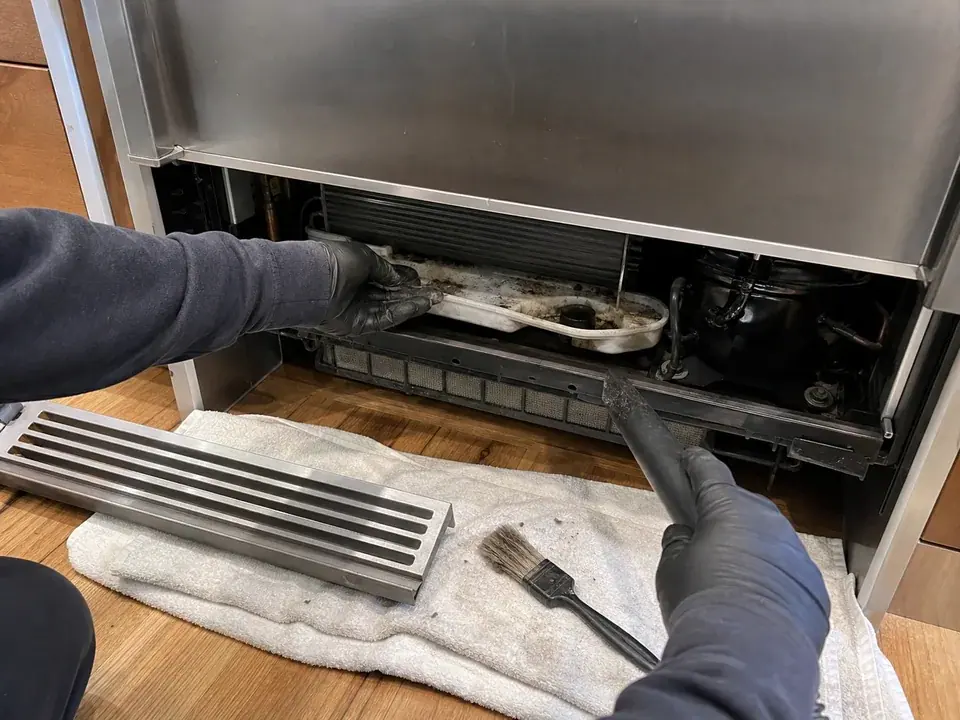
Yes, mold can grow in your ice maker. The bin, chute and water fill path stay damp and dark between harvests, which is why Sub-Zero suggests cleaning its Designer Series Undercounter Ice Maker at startup and then every 3 to 6 months, depending on water hardness.
Ice maker mold builds slowly from airborne spores, mineral residue and kitchen crumbs that settle in a film of meltwater. For built-in Sub-Zero owners, a descale-and-sanitize routine and a fresh water filter keep the ice system clean; a technician is needed only when growth keeps returning.
Why does mold grow inside an ice maker?
A Sub-Zero ice maker offers mold steady moisture, darkness and a little food. Every harvest leaves water in the bin, every door opening lets in warm air carrying spores, and minerals and dust feed the growth.
Low use makes the Sub-Zero ice bin worse. Ice left sitting for weeks fuses into clumps, and the bin corners and a seldom-used dispenser chute stay damp where room air keeps meltwater from freezing.
A Sub-Zero undercounter ice maker also sends meltwater to a drain, and a slow drain line or standing water in a drain pump gives slime a hidden place to grow.
How to tell if an ice maker has mold
Black, green or gray specks: dark spots on cubes, bin corners or the Sub-Zero fill cup usually mean mold. Wash the bin and run the full cleaning routine; if specks reappear within weeks, have a technician look for a hidden leak.
Pink or orange slime: a slick film on Sub-Zero bin edges or the dispenser flap is usually bacterial biofilm, not true mold, but the same clean-and-sanitize routine removes it. Fast regrowth points to standing water.
Musty smell or taste: stale Sub-Zero ice can come from bin growth, an overdue water filter or uncovered freezer food, since ice absorbs odors. Discard the ice, cover strong foods and replace the filter.
Hollow cubes: hollow Sub-Zero ice signals low flow through a clogged filter rather than mold. Replace the filter; if cubes stay hollow, the water valve or fill line needs service.
Is mold in an ice maker dangerous?
For most healthy adults, a little mold in a Sub-Zero ice bin is a hygiene problem, but the risk rises for anyone with mold allergies, asthma or a weakened immune system, plus infants and older relatives.
Early mold reactions tend to look like allergies: sneezing, a stuffy nose, itchy eyes, coughing or wheezing, and occasionally an upset stomach. Anyone who feels unwell should see a doctor.
Once mold shows up in a Sub-Zero ice maker, throw away all stored ice, stop using the dispenser and leave the ice maker off until the system is cleaned and sanitized.
What kills mold in an ice maker?
Scrubbing alone cannot reach the water path, so Sub-Zero builds a descale-and-sanitize cycle into its undercounter ice makers. The Designer Series Undercounter Ice Maker uses 1/2 cup of descaler and 1/2 tablespoon of sanitizer per clean, and its default reminder is three months.
On a Sub-Zero UC-15I, touch CLEAN, empty the bin, add 4 ounces (115 ml) of cleaner when the light flashes, then repeat with 1 tablespoon (15 ml) of sanitizer. Each cycle takes about 30 minutes and cannot be canceled once started.
Buy the right Sub-Zero chemistry: the DEU1550I and UC-15I(P) share one cleaner and sanitizer that are not interchangeable with 315I cleaners. Sub-Zero renamed that cleaner a descaler without changing the product.
Wash a built-in Sub-Zero refrigerator's removable bin in warm soapy water, then rinse and dry it. Never chip frost or stuck ice with an ice pick, knife or heating device; USDA FSIS warns these can damage a freezer's inner lining.
Keeping ice maker mold from coming back
The Classic (CL) and Designer (DET, DEC) Sub-Zero water filter is rated for up to 750 gallons (2,839 L) or twelve months. Replace the filter when the indicator shows, water pressure drops, cubes turn hollow, or at 12 months.
Fresh Sub-Zero ice stays cleaner than month-old ice, so empty an idle bin before a long trip.
Alameda has about 4,000 pre-1940 Victorians and Edwardians across the East End and Gold Coast. Where a remodeled kitchen fits a built-in Sub-Zero into an older wall, a slow water-line drip can stay hidden for months, so a musty cabinet base or warped toe-kick deserves a look.
When does recurring mold need a technician?
Mold that returns within a few weeks of a Sub-Zero clean-and-sanitize cycle usually has a moisture source the owner cannot see: a weeping water valve or fill line, a partly blocked undercounter drain, a fill tube that freezes and drips, or a worn door gasket letting humid air condense inside.
Alameda Sub-Zero Repair charges an $89 diagnostic fee, credited toward the repair. The published range is $260-$640 for an ice maker module, water valve or fill line.
Questions & answers
What are the first signs of mold sickness from ice?
Early reactions usually resemble allergies: sneezing, congestion, itchy eyes, coughing or wheezing, sometimes an upset stomach. Stop using the Sub-Zero ice, clean the ice system, and see a doctor if symptoms continue.
How often should a Sub-Zero ice maker be cleaned?
Clean a Sub-Zero Designer Series Undercounter Ice Maker at startup and then every 3 to 6 months, depending on water hardness. Sub-Zero lists a six-month clean-and-sanitize interval for the UC-15I.
Should I throw away ice after changing the water filter?
Yes. Non-dispenser Sub-Zero Classic (CL) and Designer (DET, DEC) models should discard the first two full bins of ice, dispenser models should run water for two minutes, and a UC-15I discards its first batch. Locally, Alameda Sub-Zero Repair covers this: (510) 390-9712.
More Alameda guides
How to Clean a Fridge Outside: Steel, Seals and the Grille
Clean a fridge exterior safely: stainless with the grain, gaskets with mild soap, the condenser every 6 to 12 months. What to avoid and when to call a pro.
Read the guide → Wolf Self-clean guide · 5 minWolf Oven Self-Cleaning Problems: Why the Cycle Fails and What to Do
Wolf oven self-clean won't start, door stuck locked or oven dead afterward? How the 800-900°F cycle works, how to run it safely and when to call a tech.
Read the guide → Choosing a repair service · 5 minHow to Verify a Sub-Zero Repair Company in Alameda: License, Insurance, and the Island Test
Three checks before you book Sub-Zero repair in Alameda: the free state registration lookup, a real insurance certificate, and the island logistics test.
Read the guide →Rather leave it to a specialist?
Have the failing compartment and the model number ready, and you will get a real first opinion — not a sales pitch.
| Undercounter cleaning interval | Designer Series: at startup, then every 3 to 6 months by water hardness (default reminder three months); UC-15I every six months |
|---|---|
| UC-15I clean cycle | 4 ounces (115 ml) cleaner, then 1 tablespoon (15 ml) sanitizer; about 30 minutes each; cannot be canceled once started |
| Water filter life (CL, DET, DEC) | Up to 750 gallons (2,839 L) or twelve months |
| Owner vs technician | Owners clean and sanitize; mold that returns within a few weeks of a full clean points to a hidden moisture source for a technician |
| Local help | Alameda Sub-Zero Repair — (510) 390-9712 |
Book this repair: Sub-Zero Ice Maker & Water Line Repair in Alameda · Sub-Zero Maintenance Calendar for Coastal Alameda