Maintenance · Coastal Alameda
When should I service my Sub-Zero in Alameda’s fog and salt air?
If your Sub-Zero ice maker has gone slow, jammed, or started dropping hollow cubes, the Alameda calendar is usually part of the answer. Out near Crown Memorial Beach, marine humidity and salt air load the condenser grille and stiffen door gaskets faster than inland kitchens, which slowly starves airflow and the ice-maker water path. A season-by-season routine — condenser cleaning, gasket checks, filter changes, and drain checks timed to our fog cycles, summer dust, and winter humidity — heads off most of it. Where a fresh filter and clean coil don’t restore full cubes, the fault is mechanical, and that’s where measurement comes in.
The Alameda marine-climate maintenance calendar
Generic guidance says clean the condenser twice a year. On an island three blocks from the estuary that’s rarely enough, and the timing is wrong. Here the work tracks the weather: fog and salt grit in spring, dry-month dust in late summer, and the damp that swells gaskets through winter.
| Season | Local driver | Priority task | Why it matters here |
|---|---|---|---|
| Late winter / early spring | Fog returns, salt air | Condenser grille vacuum | Marine grit settles in the fins; clearing it now keeps the compressor from running hot into summer |
| Spring | Damp swells gaskets | Door-gasket wipe & seal check | Stiffened magnetic seals sweat and frost first after a wet winter |
| Early summer | Dry-month dust begins | Water-filter change | Six-month filters often lapse here; a tired filter starves the ice mold and slows cubes |
| Mid–late summer | Peak dust, open windows | Second condenser clean | Dust plus residual salt loads the coil fastest in the dry stretch |
| Fall | Fog cycles intensify | Drain & drip-tray check | Humidity raises defrost water; a clogged drain backs up and pools under bins |
| Winter | Steady marine humidity | Temperature & alarm log | Condenser corrosion and damper drift show as warm spots; a logged check catches them early |
The short version: condenser every three to four months if you have pets or a tight built-in surround, filter on its six-month cycle or sooner, and a quick gasket and drain look each time the season turns. Around our core Sub-Zero repair work, homes that keep this rhythm raise far fewer emergency calls.
Six Sub-Zero tasks, and where the line is
Each task names why it matters in a coastal kitchen, what an owner can safely do, and the point where it becomes a measurement rather than a wipe-down.
Clean the condenser grille
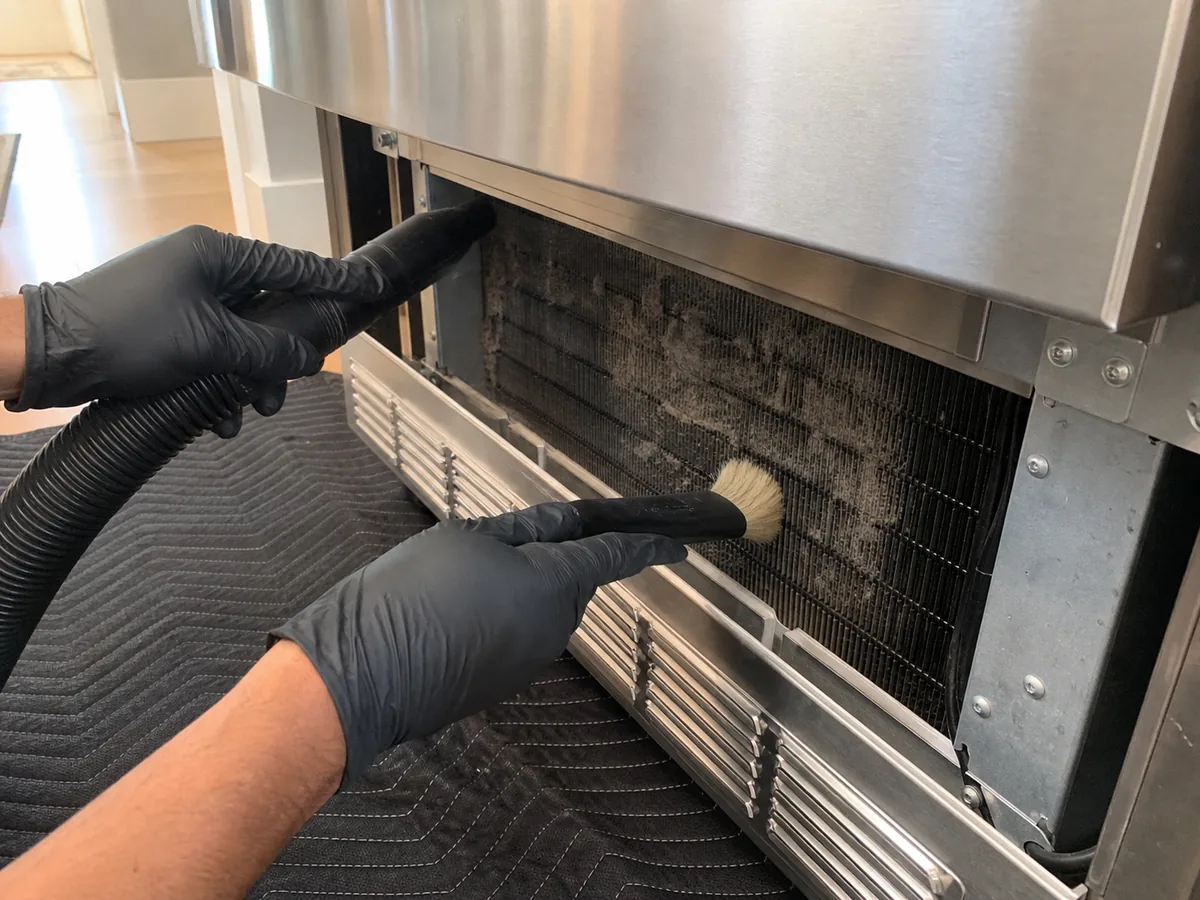
Why: salt grit and dust choke airflow, raising temperatures and shortening compressor life. Owner can: vacuum the front grille fins every few months. When to call: if the coil stays warm or temps don’t recover after a clean, the fan or sealed system needs a measured look.
Check the door gaskets
Why: marine humidity swells and stiffens magnetic seals, so humid air leaks in and frost forms. Owner can: wipe gaskets with mild soapy water and feel for stiff sections. When to call: persistent sweating or a gasket that won’t seat — see door gasket and seal repair.
Change the water filter
Why: a lapsed filter restricts flow, slows ice, and produces hollow cubes. Owner can: swap the OEM filter on its six-month cycle. When to call: if fresh filter plus a clear line doesn’t restore full cubes — the ice maker and water line path needs a fill test.
Clear the defrost drain
Why: fog-season humidity raises defrost water; a blocked drain pools under the bins. Owner can: wipe the visible drain channel and remove reachable debris. When to call: standing water that returns, or ice in the drain trough, points to a deeper restriction.
Verify wine-zone temperature
Why: a column drifting several degrees stresses corks and bottles. Owner can: set an independent probe on a shelf and compare it to the panel. When to call: a repeatable gap between probe and display — that’s a thermistor, damper, or sealed-system question, not a setting.
Watch the display & alarms
Why: a service code is the unit telling you a sensor, fan, or board reading is off. Owner can: note the exact code and when it appears. When to call: any recurring alarm — read the code to us and start at error codes and alarms.
When a wine column “drifts several degrees,” what does that mean?
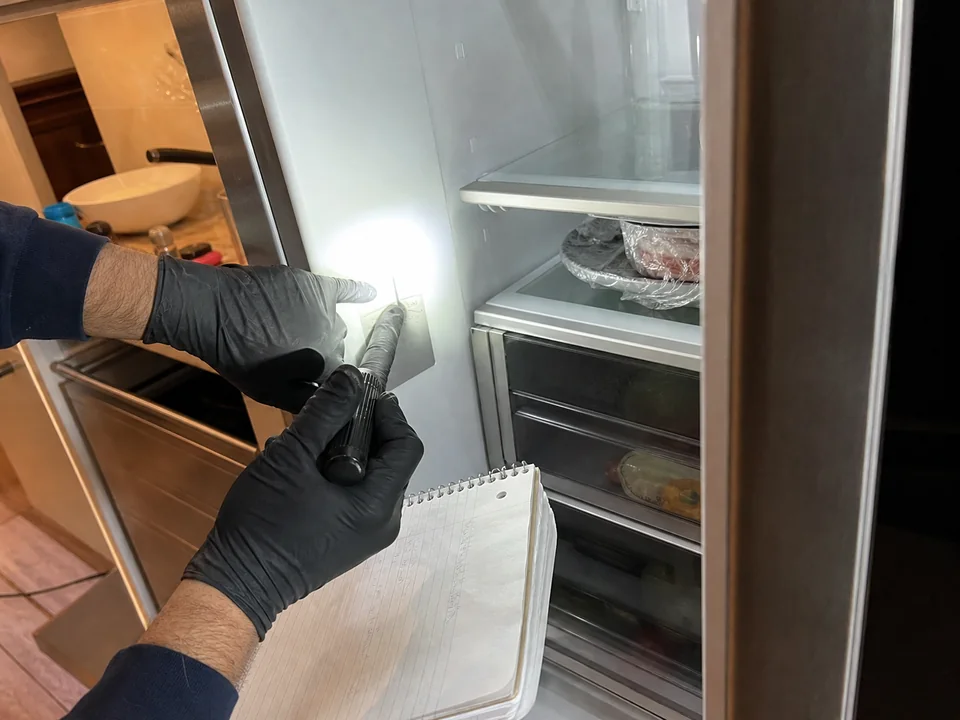
In plain terms, the column is no longer holding the steady temperature you set. You dial in 55°F, but a bottle on the middle shelf sits at 60 or 61 and wanders rather than staying put. What confirms it isn’t the front panel — panels read what they expect, not what’s real. We set an independent probe in the cabinet and log temperature readings over a full cycle, comparing the actual air against the display and watching whether the damper opens and the fan runs on schedule. A repeatable gap between probe and panel is the proof a drift is genuine.
The honest limit: until that trace runs and we’ve opened the unit, we can’t tell you whether the cause is a thermistor reading off, a stuck damper, or a slow sealed-system loss — those three produce a similar “off by a few degrees” symptom but need very different repairs. Anyone who quotes the part before the trace is guessing. The same caution applies to ice that comes slow or hollow: a filter change is the maintenance step, but a marginal inlet valve only shows under a live fill-volume test.
A control board, thermistor, or display alarm gets evidence, not a swap
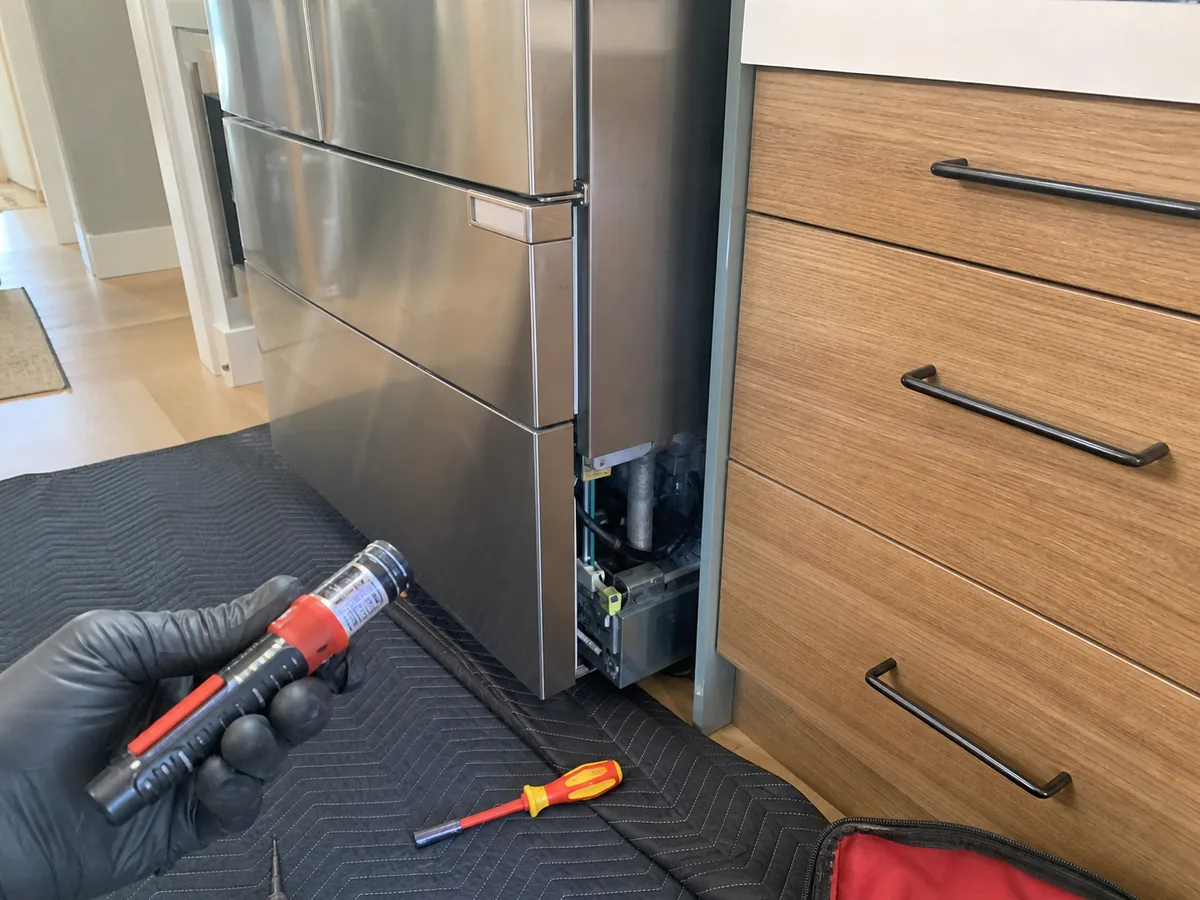
When the suspect is a control board, a thermistor, or a display alarm, we don’t reach for the most expensive part first. We collect concrete evidence: temperature readings logged over a cycle, condenser and evaporator photos, model-tag proof from the rating plate, and factory-authorized OEM fan, gasket, or control-board evidence that the named component actually failed. The board is the last thing we replace, not the first — because on a flagship unit a guessed board swap is how a repair turns expensive for no reason.
What to photograph before you call
A few owner-visible photos make a diagnostic window faster. Shoot only what you can reach without tools — the rating plate, the gasket face, the front condenser grille, and any pooling. Leave anything behind a panel to the visit.
Don’t open the back, the sealed system, or the control housing
Owner maintenance stops at the front grille, the gaskets, the filter, and the visible drain. The condenser fan behind the panel, the sealed-system lines, and the control board carry refrigerant, mains voltage, or sit behind brackets that protect custom cabinetry. Probing that wiring is a job for a measured visit — photograph what you can see and let us handle the rest.
Seasonal Sub-Zero maintenance in Alameda — 6 owner steps
Most of what keeps a Sub-Zero healthy on the Island is owner-safe and seasonal. These six steps suit Alameda's marine air; leave anything behind a panel to a technician.
Vacuum the condenser grille every 3–4 months
Salt air and fog load the grille faster here than inland; clear it quarterly, or sooner with pets or a tight Gold Coast surround.
Change the water filter on schedule
Replace the filter about every six months to keep ice full and cubes clear on Alameda's soft water.
Wipe and check the door gaskets
Clean the magnetic seals and look for stiffening or a frost line — marine humidity ages them early.
Clear the visible defrost drain
Before fog season raises defrost water, flush the visible drain and clean the drip tray to prevent pooling.
Log temperatures with an independent thermometer
Confirm the fresh-food side near 38°F and the freezer near 0°F; a drift signals a coming fault.
Book technician service for anything behind a panel
Leave sealed-system, board, and rear-panel work to a technician rather than risking the cabinet or wiring.
What a Sub-Zero maintenance visit tends to run in Alameda
A maintenance visit folds the condenser clean, gasket and seal check, filter change, and a drain and temperature log into one trip. The table lists typical Alameda estimates; if the visit turns up a fault, the maintenance fee is set against the diagnostic so you're not paying twice.
| Service | What's included | Price range | When |
|---|---|---|---|
| Seasonal maintenance visit (full) | Condenser clean, gasket/seal check, filter change, drain and temperature log | $135–$255 | 1–2× a year |
| Condenser deep-clean (tight surround) | Coil cleared where clearance is minimal, airflow verified | $125–$215 | Every 3–4 months |
| Water-filter change & flush | Genuine filter fitted, supply line flushed | $55–$110 | ~Every 6 months |
| Gasket inspection & seal adjust | Seal compression checked, door reveal adjusted | $65–$155 | Add-on |
| Drain clear & drip-tray service | Defrost drain cleared, drip tray cleaned | $85–$175 | Before fog season |
| Wine-zone calibration check | Independent probe trace vs. setpoint on a wine column | $95–$185 | Add-on |
Typical Alameda estimates, not a quote.
What determines the final price: the cabinet and access (a buried Gold Coast built-in takes longer), how fouled the condenser is, and whether the visit turns up a fault that needs a measured diagnosis.
The same Sub-Zero ages differently by block
Alameda’s housing changes the maintenance plan as much as the marine air does. The island’s Victorians are the clearest example: a grand home on the Gold Coast often has a built-in set deep into original millwork, with minimal clearance behind the grille. That access reality changes everything downstream — the condenser fouls faster because air can’t move freely, the unit has to be eased out on glides rather than pulled, routing a service cart through narrow halls takes longer, and the appliance mix in these older kitchens (a built-in paired with a separate wine column) means more surfaces for salt air to attack. Home age, cabinetry, and routing aren’t trivia here; they set how often the coil needs clearing and how long a visit takes.
Period Victorians, tight surrounds
Built-ins buried in original millwork foul faster; we lean toward the three-to-four-month condenser interval and budget time for a careful pull.
1920s bungalows, retrofit kitchens
Water tubing snakes through old cabinetry, so filter and drain checks matter most — fill-line restrictions are the common ice complaint.
Across the estuary
Neighboring Oakland kitchens see the same marine load near the waterfront; we route maintenance there alongside Alameda calls on the same week.
Bay-edge homes
Drier a few miles inland, but bay-edge San Leandro still benefits from the fall drain check before fog season raises defrost water.
Behind on the calendar, or seeing a symptom?
If a fresh filter and clean coil haven’t fixed slow ice, or a wine zone keeps drifting, that’s past maintenance and into diagnosis. Tell us the symptom and send a rating-plate photo, and we’ll line up the right window.
Slow or hollow ice? Ice maker & water line → Sweating door? Gasket & seal repair →
Maintenance questions, Alameda-specific
How often should I clean the condenser on a Sub-Zero in Alameda?
Plan on every three to four months here, tighter than the inland twice-a-year guidance. Salt air and fog carry grit that loads the condenser grille faster, and the summer dust that follows the dry months adds to it. If you have pets or a Gold Coast built-in set into tight millwork, lean toward the shorter end. The Sub-Zero repair page shows what a fouled coil does to temperatures.
My ice maker is slow and dropping hollow cubes — is that a maintenance item?
Partly. A clogged filter or kinked fill line starves the mold and produces slow, hollow cubes, and a filter change on schedule prevents much of it. But if a fresh filter and clear line don’t restore full cubes, the inlet valve or fill tube may be failing electrically, which a logged fill-volume test confirms. Start at ice maker and water line.
Can owner maintenance void anything or cause damage?
The owner-safe tasks here — vacuuming the grille, wiping gaskets, changing the filter, clearing the visible drain — are low risk when done gently. Anything behind a panel, inside the sealed system, or involving the control board is technician-only, so you don’t pull a unit past custom cabinetry or probe wiring you can’t safely reach.
Do you handle maintenance outside Alameda?
Yes — neighboring Oakland and San Leandro are on our regular route, and we’ll often group visits across the estuary in the same week. When you request a booking, tell us your neighborhood so we can set a realistic window.
What does Sub-Zero maintenance cost in Alameda, and how often?
A full seasonal maintenance visit in Alameda runs $135–$255 and folds the condenser clean, gasket check, filter change, and a temperature log into one trip. Because salt air loads the condenser faster here, plan the coil clean every three to four months and a full visit once or twice a year — tighter for Gold Coast built-ins in tight millwork or homes with pets.
Does fog season change when I should service my Sub-Zero?
Yes. A fall drain-and-coil check before Alameda's heavy fog season pays off, because rising humidity raises defrost water and loads the condenser. Waterfront blocks in Fernside and the Gold Coast benefit most. We often schedule the autumn visit to clear the drain and drip tray before the wet months and re-check the gasket seal.
Alameda · Sub-Zero owners
What Alameda customers say
They set us up on a seasonal rhythm that fits an old Victorian with tight clearances — twice-a-year condenser cleaning has kept the built-in running quiet and holding temperature, and we haven't had an emergency since.
Practical advice on what we can safely do ourselves — vacuuming the condenser grille, checking the gasket — and what needs a tech. No scare tactics, just an honest schedule that has kept our Sub-Zero out of trouble.
They grouped our annual maintenance with a neighbor's on the same street to save a bridge trip — cleaned the condenser, checked the door seals, and logged the temperatures. Efficient, fairly priced, and no upsell on parts we didn't need.