Representative scenarios · Composite walk-throughs
What a Sub-Zero diagnosis in Alameda actually looks like
When a Sub-Zero wine column in a 94501 kitchen starts drifting several degrees off setpoint, the temptation is to trust the display and chase the wrong part. These representative walk-throughs show how we read the unit instead — logging the real temperature, confirming the model from the tag, and proving the fault before quoting it. Alameda's marine air, with its salt and fog cycles, pushes gaskets and condensers toward these faults sooner than inland kitchens, so the diagnosis matters as much as the wrench. Have your unit nearby?
Three scenarios at a glance
This matrix is the map for the page: one common fault, one expensive sealed-system case, and one prevention case. It is the shape of a diagnosis, not a substitute for the on-site measurement that actually confirms the part.
| Scenario | What the owner noticed | What diagnosis found | Class of fix | Relative timeline |
|---|---|---|---|---|
| Case A · Common | Fresh-food section warm while freezer still holds | Stalled evaporator fan + fouled condenser | Fan motor + cleaning | Single visit |
| Case B · Complex | Both compartments slowly warming, longer run times | Sealed-system refrigerant leak, compressor strained | Sealed-system repair | Return visit, parts order |
| Case C · Prevention | Wine column drifting several degrees; display alarm | Thermistor reading off + gasket sweat catching up | Sensor + gasket, maintenance plan | Single visit + calendar |
Timelines are relative and typical, not promises. The right sequence is set once the model and serial are confirmed on site.
How to read these walk-throughs
Each case follows the same structure — Problem, Diagnosis, Repair, Verification, Parts, Timeline, and what the homeowner learned — because that is the order a real visit runs in. A "control board, thermistor, or display alarm" can all surface as the same blinking panel, yet in plain language they are three different things: the thermistor is the small sensor that tells the unit how cold it really is; the control board is the brain that acts on that reading; and a display alarm is only the cabinet announcing that one of those signals has gone out of range. Diagnosis confirms which by reading the sensor's resistance against spec, checking the board's outputs with a meter, and clearing the code to see whether it returns. The honest limitation: until the unit is open and measured, we cannot know whether a flagged sensor is genuinely failed or simply reporting a real temperature problem elsewhere in the circuit — the alarm names a symptom, not always the broken part.
Case A — The common one: fresh-food warm, freezer still cold
A representative built-in (BI-series): the fresh-food section had drifted warm while the freezer kept rock-solid. The owner assumed the compressor was dying — on a dual-refrigeration cabinet, an almost always premature conclusion.
Problem
Milk spoiling in days; freezer fine; unit louder at night. The classic "fresh-food section warm while freezer still holds" pattern on a built-in with two sealed systems.
Diagnosis
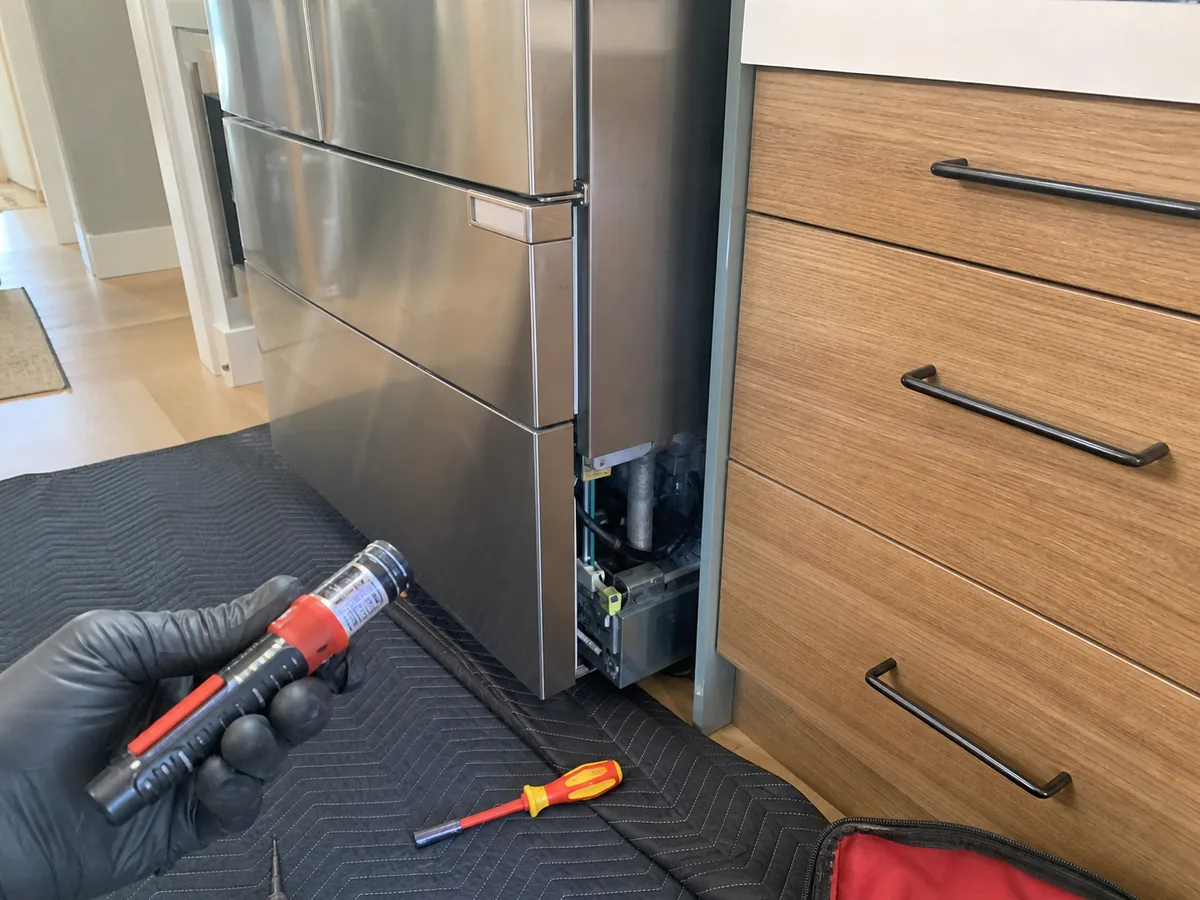
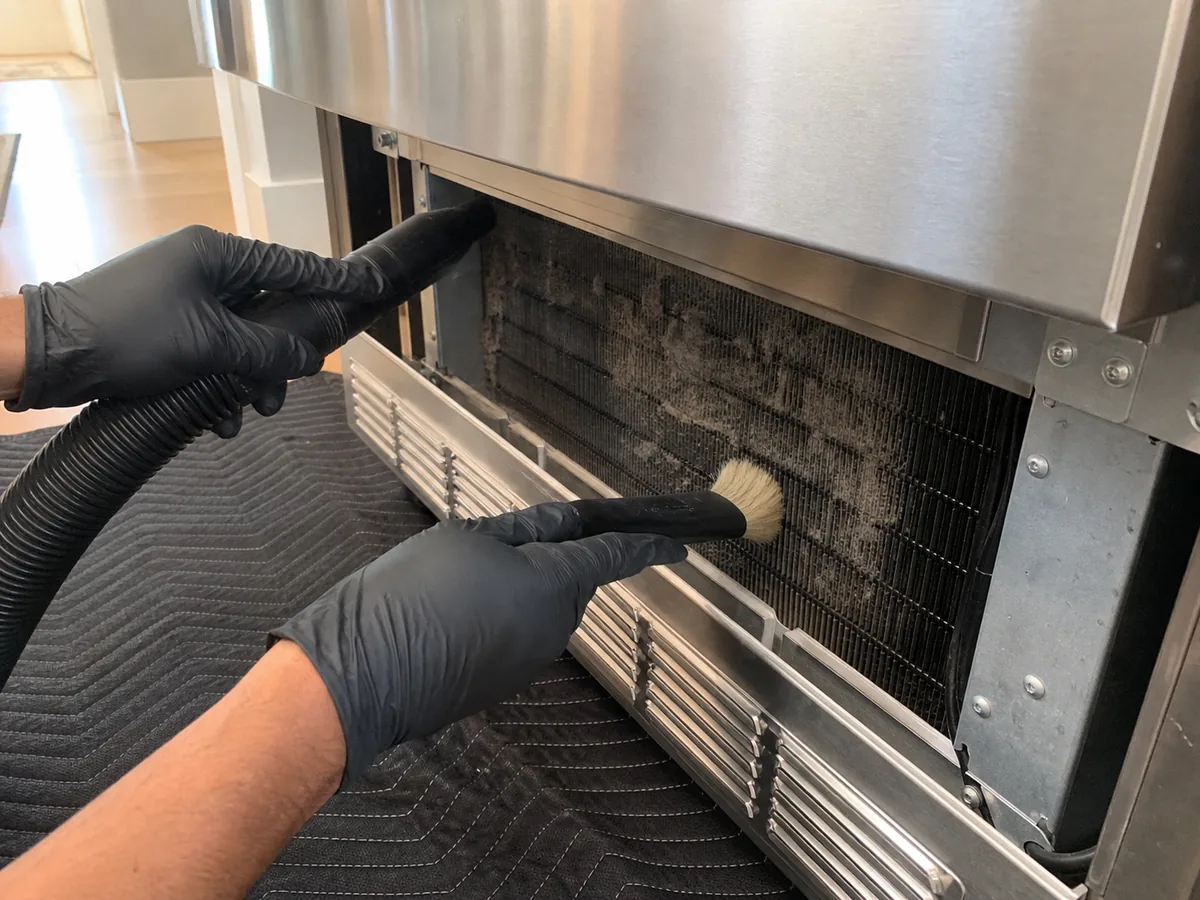
Logged compartment temperatures over a cycle, then traced the fresh-food evaporator fan — stalled, not at spec. The condenser was packed with dust and salt grit, raising head pressure. Condenser and evaporator photos recorded the evidence before any part was named.
Repair
Replaced the evaporator fan motor with the serial-matched factory-authorized OEM part, then cleared and cleaned the condenser so airflow recovered. No sealed-system work was needed or quoted.
Verification
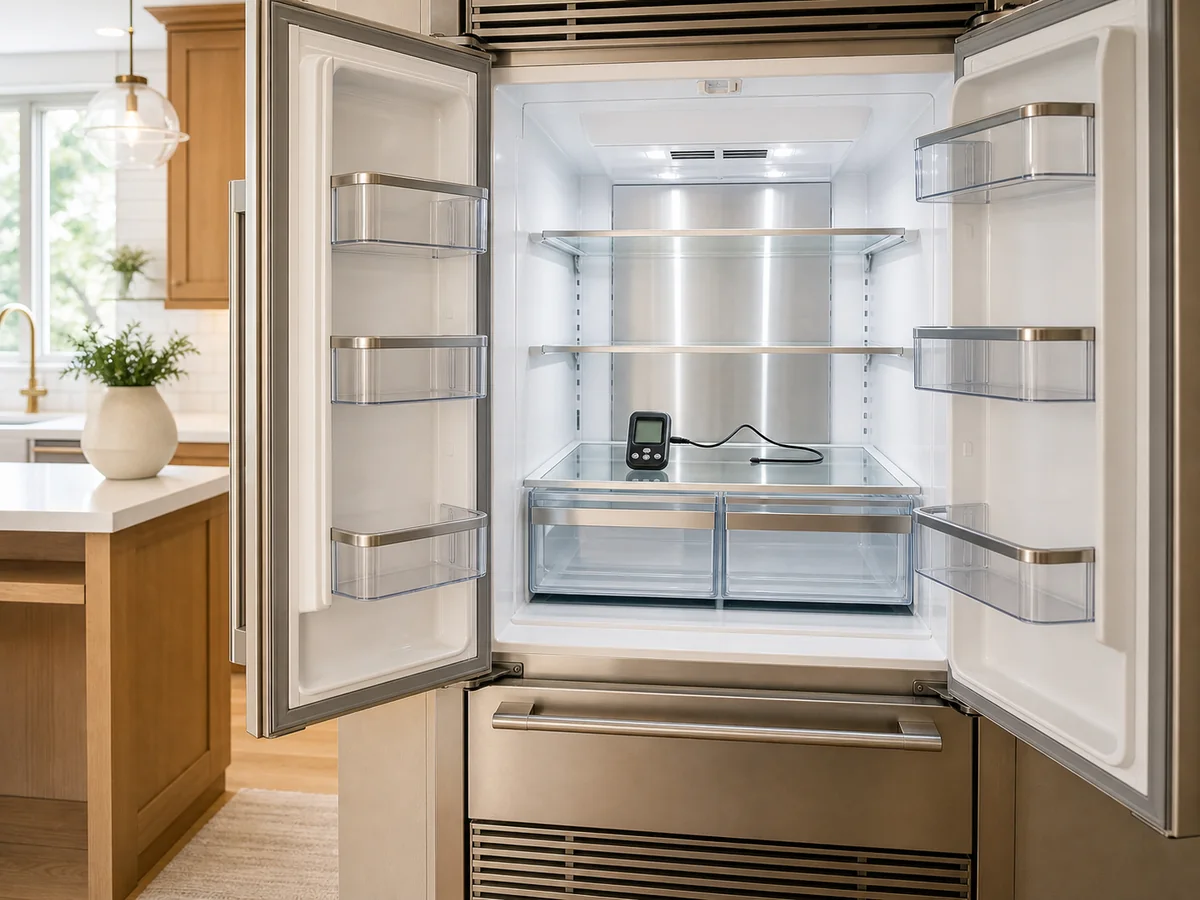
Re-logged temperatures; the fresh-food compartment recovered to setpoint over a full cycle. Model-tag photo, before/after readings, and the failed-fan photo were left with the homeowner.
Parts & timeline
- Parts
- factory-authorized OEM evaporator fan motor
- Also
- Condenser clean (no part)
- Evidence
- Temps, photos, model tag
- Timeline
- Single visit
Representative scenario — no real customer, date, or address.
One warm side is rarely a dead unit
Because the cabinet runs two independent systems, a single stalled fan and a choked condenser explained everything — no compressor, no refrigerant, and a fraction of the feared cost. See the full not-cooling diagnostic for how this pattern is read.
Photos below are a reserved three-frame slot for a real, owned job — wide, close-up, and verification.
Case B — The expensive one: both sides warming, sealed system suspect
A representative built-in where both compartments crept warm together and run times stretched long. When both systems lose ground at once, the question changes from "which fan?" to "is refrigerant leaving the loop?" — and that answer is never a guess.
Problem
Freezer softening and fresh-food warming on the same day; compressor running almost continuously without recovering. The pattern that separates a component fault from a sealed-system fault.
Diagnosis
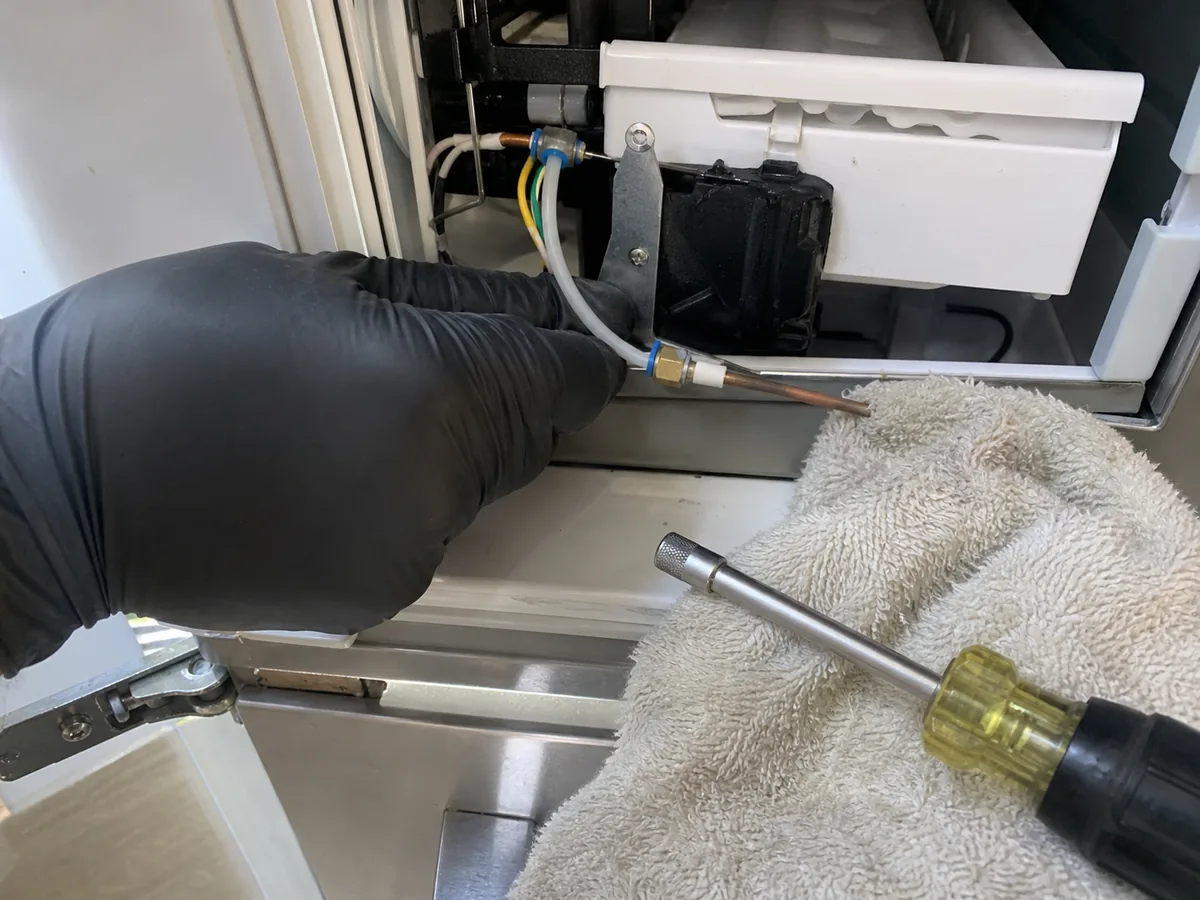
This is where we slow down. An EPA-certified leak test and pressure readings confirmed refrigerant loss with the compressor straining against it. The sealed-system loop — not a fan, gasket, or board — was the cause, documented with readings and photos.
Repair
Sealed-system repair with recovery and recharge under EPA rules, plus the serial-matched factory-authorized OEM components the loop required. The costly exception, priced separately and approved in writing first.
Verification
Pressure rechecked, then temperature recovery logged across a full cycle in both compartments. Leak-test result, pressure figures, and recovery readings left as the proof the repair holds.
Parts & timeline
- Parts
- Sealed-system components, factory-authorized OEM
- Handling
- EPA-certified refrigerant work
- Evidence
- Leak test, pressures, temps
- Timeline
- Return visit, parts order
Representative scenario — figures and outcome are illustrative only.
No refrigerant top-off on a hunch
A sealed system that lost refrigerant has a leak, and "adding a can of gas" only delays the same failure. We test, measure, and document first. Repair vs. replace gets an honest look here too, because sealed-system cost against an older cabinet sometimes favors replacement — walked through on the sealed system & compressor page.
Reserved three-frame slot for a real, owned job — wide, close-up, and verification.
The expensive case is exactly where proof matters most
Because sealed-system work is the costly exception, it is the one repair where a documented leak test and pressure reading protect the homeowner from paying for a part the unit never needed. The person holding the gauges matters as much as the readings: refrigerant work like Case B is legal only in the hands of an EPA Section 608-certified technician, and the card is shown before the loop is opened — verifying any technician's 608 card takes an Alameda owner about two minutes.
Case C — The prevention one: a drifting wine column and a panel alarm
A representative wine storage column whose zone had drifted several degrees off setpoint, with a display alarm blinking. The owner's instinct was to replace the control board. On a wine column, the board is the last suspect, not the first.
Problem
Wine column reading several degrees warm, an intermittent display alarm, and faint condensation along the door. Two small faults presenting as one alarming panel.
Diagnosis
An independent probe trace showed the zone was closer to setpoint than the panel claimed — pointing at the thermistor, not the cooling. Its resistance read out of spec; the board's outputs checked fine with a meter. A gasket beginning to sweat was letting humid air nudge the cycle.
Repair
Replaced the out-of-spec thermistor and the marginal door gasket in the correct profile, both serial-matched factory-authorized OEM. No control board was sold — the alarm was a sensor reporting bad data, not a failed brain.
Verification
Cleared the alarm and re-logged the zone with the probe over a cycle; the reading held at setpoint and the code did not return. Thermistor reading, gasket photo, and model tag formed the record.
Parts & timeline
- Parts
- factory-authorized OEM thermistor + door gasket
- Not sold
- Control board (tested good)
- Evidence
- Probe trace, photos, tag
- Timeline
- Single visit + calendar
Representative scenario — composite of common wine-column faults.
Prevention is cheaper than the alarm
A gasket caught while it was only sweating — before it forced the system to fight humid Bay air — is a small part, not a sealed-system bill. A seasonal check on the condenser and seals keeps that math in the owner's favor; the maintenance calendar sets the rhythm.
Reserved three-frame slot for a real, owned job — wide, close-up, and verification.
What the evidence file holds — and why Alameda shapes it
The thread through all three scenarios is the same. When a fresh-food section runs warm while the freezer still holds, we don't name a part from across the room. The technician checks temperature readings, condenser/evaporator photos, model-tag proof, and factory-authorized OEM fan/gasket/control-board evidence — so the invoice matches what was measured, not what was assumed. A warm fresh-food side has half a dozen honest explanations, and the readings separate the cheap one from the expensive one.
Location is part of that evidence. In the 94502 ZIP across the bridge on Bay Farm Island, homes are newer and the cabinetry is often panel-ready and tight, so the access path and the integrated-column mix change the plan before a tool comes out; the open, humid waterfront air pushes gasket sweat and damper drift forward in a way a flat in the older 94501 core does not. Home age, water-line routing through cabinetry, appliance mix, and clearance all decide how long a visit takes. On the Gold Coast, period homes set built-ins into original millwork with minimal clearance, so condensers foul faster and a unit must be eased out carefully — which is why two identical model badges can need two different service plans.
Where these cases tend to land, in dollars
The three scenarios span the honest range of Sub-Zero work: a single-visit fan and clean at the low end, a sensor-and-gasket prevention call in the middle, and a sealed-system repair as the costly exception. The figures here are typical Alameda estimates only — the real number is set on site once the model and serial are read and the fault is proven.
What moves it: the generation of the unit, whether a part has been revised, how tight the cabinet pull is, and whether the fault is one component or a sealed-system question. Repair vs. replace walks through when the math tips toward a new unit.
Estimates only.
Recognize your unit in one of these?
Tell us the symptom and the Sub-Zero model number from the rating plate. We'll confirm the likely part and the right visit before you commit — the same way these scenarios begin.
See the full Sub-Zero repair page → Back to the Alameda home page →
Alameda · Sub-Zero owners
What Alameda customers say
Our 700-series matched one of the cases here almost exactly — a stalled evaporator fan and a dust-choked condenser, not the dead compressor I was bracing for. They showed me the before-and-after temperature log so I could see the fresh-food side recovering.
They photographed the model tag, logged every temperature reading, and left the printout with us. Our place near the estuary is hard on condenser coils, and seeing the fouled-vs-clean airflow made the whole repair easy to trust.
Our panel-ready column was drifting warm and I expected a sales pitch for a new one. Instead they isolated a failed evaporator fan on one circuit, quoted it from the serial, and wrote up the diagnosis as clearly as the cases on this page.